
Claire’s Woodland Skills Journey
This year, we proudly welcomed the second cohort of participants to our acclaimed Woodland Skills Course – a free programme aimed at helping adults build the skills […]

2nd December 2025
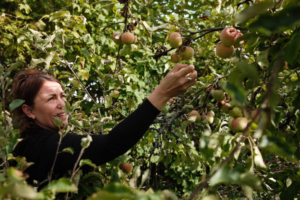
Discreetly nestled away in the Gloucestershire countryside, these impressive organic gardens are the perfect example of The King’s environmental philosophy: to work sustainably with nature, not against it. The gardens feature an extensive collection of fruit trees; ranging from apples, pears, quince, plums, cherries and crabapple.
With a collection of over 1,000 varieties of apples, from local cultivars such as Ashmead’s Kernel, Beauty of Bath, Golden Knob to rare heritage types such as D’Arcy Spice, Cornish Aromatic, Golden Pippin (considered to be the oldest English apple on record), and even a tree purportedly descended from Sir Isaac Newton’s famous apple tree, who better to approach for advice on all things fruity!
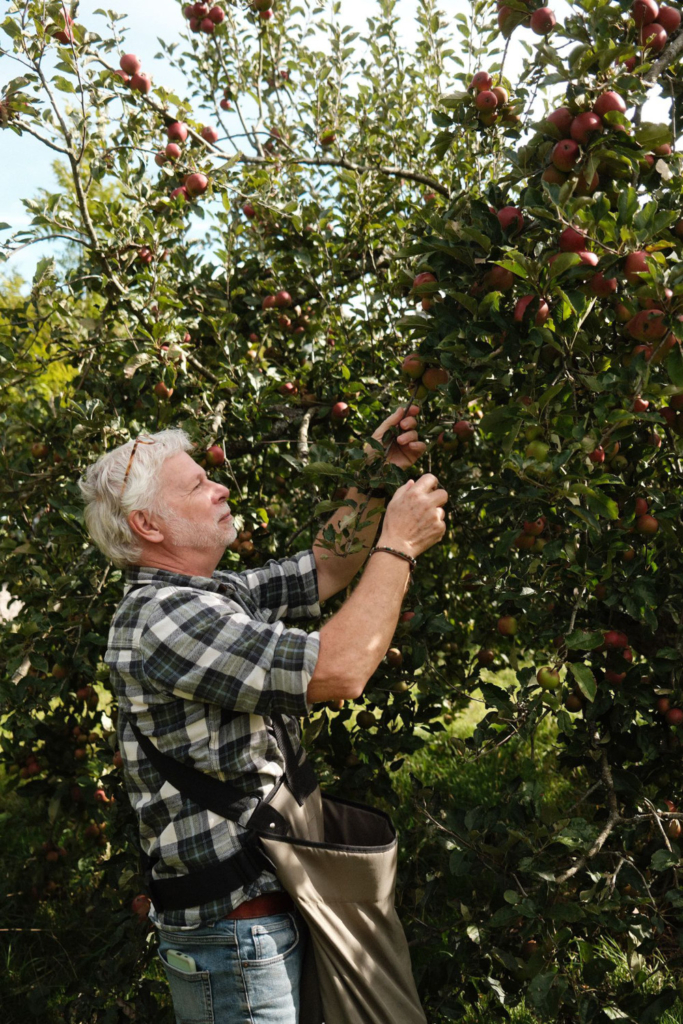
Hosted by their senior gardener Sabrina, we spent a wonderful morning with a tour of the orchard and kitchen gardens (where much apple chat and advice ensued) in exchange for helping to harvest this year’s crop.
We are currently in the process of planning a 6 hectare traditional orchard at our largest site of Lower Chew Forest and when it comes to fruit trees, there are lots of elements to consider!
Many fruit trees including apples, pears and plums require a certain number of ‘chilling hours’ (periods of cool temperatures typically below 6°C) during their dormant period to grow back strongly in spring and set viable flower buds. Each variety has its own number of chill hours essential for fruit production; these can range from as few as 100 to over 1000.
With average local temperatures predicted to rise by at least 2°C by 2050, this will put significant pressure on our local fruit varieties, which have been cultivated for a cooler climate. With warmer and wetter winters becoming more likely, it is really important that we select the best cultivars already adapted to warmer conditions.
Another factor to consider is pollination groups; meaning when the trees flower and whether they are diploid (fertile or self-fertile) or triploid (pollen sterile but can be pollinated by other diploid varieties).
Soil is another crucial consideration. As a general rule, most fruit trees prefer fertile, slightly acidic to neutral, well-draining loam. Our soil is clay over limestone, which is slightly alkaline with a tendency to hold water when saturated and dry out during warmer periods.
And lastly but by no means least, what do we intend to use the fruit for, whether that’s juice, cider, eating, cooking, or all of the above!
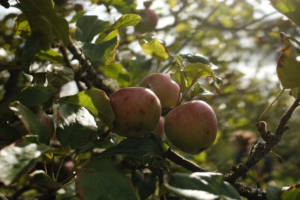
It was extremely helpful to see the mature fruit trees in situ at Highgrove, particularly with how this year’s dry summer had affected the crop. Many of the apple trees had set lots of fruit, but the drought meant the fruits were considerably smaller. Some varieties coped better with the hotter conditions, whilst others suffered leaf loss. But fret not: these issues can be holistically managed with correct pruning, shading from nearby trees, watering and of course that horticultural favourite, mulch!
The visit has given us a lot of fruit for thought. We would like to give a big thank you to the gardening team at Highgrove, who made us feel so welcome. Myself and our volunteers would have happily picked apples till the cows came home in such a beautiful patch of Eden.
If you would like to see the gardens for yourself, please visit Highgrove’s website where all tours and upcoming events are detailed.
Photos by Alexander Turner
This year, we proudly welcomed the second cohort of participants to our acclaimed Woodland Skills Course – a free programme aimed at helping adults build the skills […]

The launch of biodiversity net gain in February 2024 was widely celebrated in the environmental sector as a potential game-changer. A pragmatic, forward thinking measure to facilitate […]

At Avon Needs Trees, our ability to carry out impactful projects relies on the support of our corporate partners. Business donations play a crucial role in transforming […]

By Susan Barker, Great Avon Wood Conservation Heritage Co-ordinator Did you know that we are creating a waymarked heritage trail through the new woodland we are planting […]

With your support we can create more woodlands than ever to lock up carbon and help nature bounce back.